

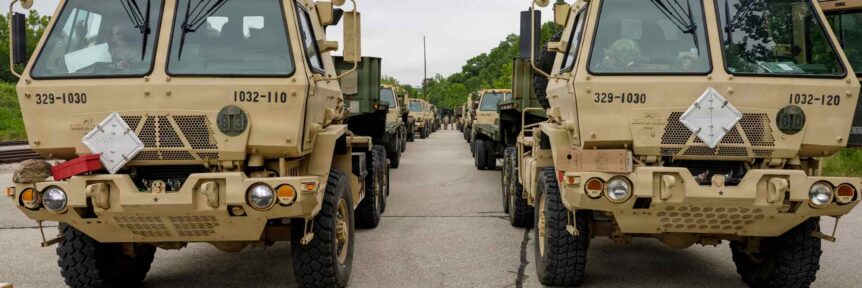
The defense industrial base is in the middle of the most aggressive production ramp since the end of the Cold War. New munitions plants, expanded vehicle lines, reshored components, and a wave of new suppliers entering the market. The Department of Defense draws on a network of more than 200,000 suppliers, and by its own assessments, visibility into most of them is limited.=
The conversation about this ramp is dominated by capacity: factory floor space, machine tools, long-lead materials, workforce headcount. Those are real constraints. But there is a quieter bottleneck that determines whether surged production actually turns into fielded capability, and it shows up after the capacity investments are made.
That bottleneck is quality throughput: the ability to verify, contain, and correct at the same speed you build.
Why ramps break on quality
When production accelerates, three things happen at once. New suppliers who have never built to your specification come online. Experienced quality personnel, already among the hardest roles to hire, get stretched across more programs. And engineering changes hit the line mid-ramp, because ramping programs are almost never design-frozen programs.
Each of these is individually manageable. Together, they compound. A new supplier ships a marginal part. The stretched quality team catches it late. The containment effort pulls inspectors off another line, and the defect trend data that would have flagged the pattern sits in a spreadsheet nobody has time to read. This is not a hypothetical sequence. It is the standard anatomy of a ramp that falls behind, and public reporting on several major defense programs over the past two years reads like a case study in it, with supplier transitions and production maturity cited again and again
The automotive stress test
There is one industry that runs this stress test constantly: automotive. A new EV plant going from zero to hundreds of thousands of units. A supplier changeover mid-model-year. A launch pulled forward a quarter for competitive reasons. Automotive OEMs fail at ramps too, but the industry has evolved an answer that defense has barely begun to adopt: flexible quality infrastructure.
Instead of sizing internal quality organizations for peak demand, leading manufacturers keep a lean core team and flex external, certified quality capacity against the risk curve. In practice that looks like inspection and containment teams that stand up on-site within 48 hours, headcount that flexes 30 percent in either direction as launch risk rises and falls, and a shared data platform where the OEM sees every defect, every trend, and every cost in real time.
The economics matter as much as the speed. Fixed quality headcount sized for surge is idle cost in steady state. Quality capacity that flexes with the program converts a fixed cost into a variable one, which is precisely what programs under congressional cost scrutiny need.
What defense-ready looks like
Importing this model into defense requires more than an automotive resume. It requires ITAR registration, US-person staffing, controlled handling of technical data, and comfort operating inside the compliance envelope of a defense program. It requires quality systems fluency that maps between IATF-style automotive standards and the AS9100 and government-audit world. And it requires the operational humility to work as an extension of a program’s existing quality organization rather than around it.
The suppliers and OEMs that solve quality throughput will be the ones that turn appropriated dollars into fielded vehicles on schedule. The ones that do not will keep explaining delays that were, at root, quality events.
Vayan Group is ITAR-registered and brings 45 years of automotive quality infrastructure, including safe launch, controlled shipping, supplier development, and real-time quality intelligence, to the defense industrial base. We currently support tactical vehicle production for a leading defense OEM. If your program is ramping, the time to build quality capacity is before the surge, not after the first escape.
The appearance of U.S. Department of War (DoW) visual information does not imply or constitute DoW endorsement.