

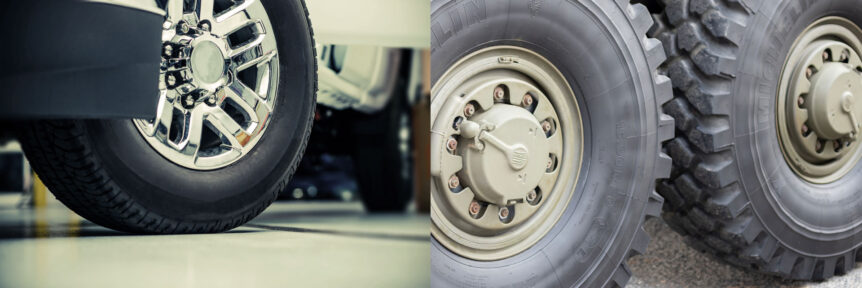
The American auto industry recalled almost 30 million vehicles in 2025. That number sounds like an indictment of automotive quality. It is actually the opposite: it is evidence of an industry that has built the most sophisticated defect detection and containment infrastructure in manufacturing, and is honest about what it finds.
Defense vehicle programs are entering a period where they will need that infrastructure more than ever. Production is being asked to accelerate. New variants are moving from development into full-rate production. Supplier bases are being rebuilt and expanded after decades of consolidation. Every one of those conditions is a quality risk multiplier, and the automotive industry has spent 40 years learning how to manage each of them.
The same parts, the same failure modes
A tactical vehicle is not a passenger car, but it is built like one. Stamped and welded structures, wiring harnesses, castings, fasteners, seals, electronics modules, and increasingly high-voltage battery systems. Many of the tiered suppliers building military vehicle content are the same companies, sometimes the same plants, building commercial automotive content.
That means the failure modes are the same too. Dimensional drift after a tooling change. A torque spec missed when a line rebalances. A harness routed a centimeter off, discovered eight stations downstream. Automotive sees these defects at a volume defense never will, which is exactly why automotive quality organizations got so good at catching them.
Where the stakes diverge
In the commercial world, an escaped defect becomes a warranty claim or a recall. Expensive, embarrassing, survivable. In defense, an escaped defect becomes a readiness gap. A vehicle that is deadlined at the unit level is not a cost line. It is capability a formation does not have, and in the current environment, fleet readiness is under more scrutiny than it has been in decades.
This is why the defense sector cannot simply inspect harder at the end of the line. The automotive lesson is that quality is won or lost at three specific moments, and each one has a proven playbook.
Three moments that decide program quality
First, launch. Automotive learned to treat the start of production as a managed risk event, not a milestone. Safe launch protocols put additional trained inspection on every critical characteristic for a defined period, with data reviewed daily and exit criteria based on demonstrated quality, not calendar dates. Programs that gate on schedule instead of quality pay for it in the field.
Second, supplier transitions. When work moves between suppliers, or a supplier ramps a new part, defect rates spike predictably. Recent public reporting on major defense vehicle programs has cited supplier transition issues as a key driver of delays. Automotive answers this with controlled shipping: independent inspection layered at the supplier until the process proves itself stable, with results visible to the customer in real time.
Third, engineering change. Vehicles in long production runs absorb hundreds of changes, and every change is a chance for the build to drift from the print. Disciplined validation and containment around change points is what keeps configuration integrity intact, which matters even more when the customer is a program office managing a fleet for 30 years.
The infrastructure already exists
The encouraging news for defense manufacturers is that none of this needs to be invented. The inspection methodologies, containment playbooks, data platforms, and trained workforce already exist, hardened by decades of automotive volume. What defense programs need is partners who can bring that infrastructure inside the fence line: ITAR-registered, staffed with US persons, and fluent in both IATF-style quality systems and the compliance realities of controlled programs.
Vayan Group has spent 45 years building exactly that capability across 20+ OEMs and more than 1,100 suppliers, and now supports defense vehicle production for a leading defense OEM. The defense industrial base is being asked to move faster than it has in a generation. Automotive quality discipline is how it gets there without breaking things along the way.